

Religious Education
Religious Education at Sharmans Cross
Religious Education enables pupils to gain knowledge and understanding of the beliefs and practices of major world religions. It helps pupils to develop their understanding of how faith and moral viewpoints shape people’s lives.
At Sharmans Cross, pupils practise critical thinking and evaluation skills as they study the beliefs, festivals, rules and traditions of major world religions. Pupils reflect on their own practices, beliefs and values and explore their spiritual and cultural well-being. Children learn to appreciate diversity, respect individual differences and demonstrate empathy by exploring different perspectives and experiences within and across faiths, including those with no religious belief.
Progression is planned into the curriculum, so that children explore, compare, define, analyse and explain as they gain the knowledge, understanding and skills needed to handle questions raised by religion and belief.
Sharmans Cross Curriculum Intent
- To explore what people believe and the impact those beliefs have on how they live (rules, festivals, worship).
- Learn about the major world faiths detailed in the Solihull Agreed Syllabus (Christianity, Islam, Judaism, Hinduism) alongside Sikhism and Buddhism to reflect our school community.
- To discuss, reflect upon and question religious and non-religious beliefs with respect and empathy in line with the school’s PRIDE values.
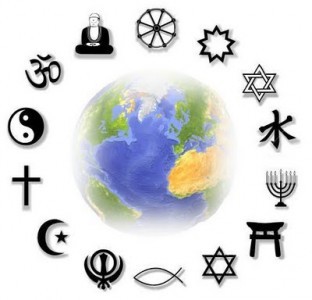
RE provides a positive context for pupils within which the diversity of cultures, beliefs and values can be celebrated and explored. The Religious Education practices, teaching and opportunities provided for children:
- Provoke challenging questions about the meaning and purpose of life, moral choices, and the spiritual dimensions of life and death. Develops pupils’ knowledge and understanding of principal religions, other religions and worldviews.
- Enables each child to investigate their own religious belief system (or none) and those of others. They will learn to express personal views and develop an understanding of the impact these may have on others.
- Build a sense of identity and belonging as an individual, within communities and as part of humankind.
- Challenge prejudice, including that based on religious background, race, culture or gender and to show respect to all.
- Develop understanding of moral virtues such as truthfulness, honesty, empathy, generosity and compassion and explore how they can positively contribute to living within the local and global community.
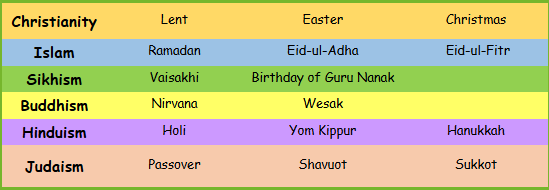
Religious Festivals
Many religions have festivals they celebrate each year. You will learn about some of these in RE lessons as well as having assemblies and sometimes whole school activities that help us to understand the festivals more and why they are celebrated.
Here are some of the main festivals or celebrations that the religions we study have each year: